jueves, 27 de febrero de 2014

DID YOU KNOW THAT DALÍ...? ( Just Chatting)


At a conference in London called "Paranoia, the Pre-Raphaelites, Harpo Marx and the ghosts" Dali made an unforgettable customary appearance as he used to. He was holding two Russian  Canes Venatici by the belt with one hand and a pool cue in the other. He was dressed with an old diver suit wearing above the helmet a mercede’s car radiator.


While trying to speak he realized that without oxygen supply through the helmet, he could not breathe. The audience was looking at him without knowing that something  was wrong; they were just thinking it was part of the performance… Meanwhile Dalí was making an effort to breathe…But finally, two of his friends realized what was happening and tried desperately to tear away the helmet (face mask) from his head.  Finally, a stagehand came to assist him and with the help of a wrench they managed to tear his helmet away and release him just when Dalí was about to asphyxiate.

En una conferencia en Londres llamada “ Paranoia, los prerrafaelistas, Harpo Marx y los fantasmas”, Dalí hizo una entra inolvidable, como solía ser costumbre en él. Sostenía dos lebreles rusos por la correa con una mano y un taco de billar con la otra. Iba vestido con un traje de buzo antiguo y encima del casco llevaba un radiador de coche de la marca Mercedes.

Al intentar hablar enseguida se dio cuenta de que, sin suministro de oxígeno en el casco, le era imposible respirar. La audiencia lo observaba sin sospechar que le pasaba, mientras Dalí hacía un esfuerzo por respirar, pensando que era parte de la actuación. Pero finalmente, dos de sus amigos lograron darse cuenta de lo que pasaba y trataron desesperadamente de arrancarle el casco. Al final llegó un tramoyista y con la ayuda de una llave inglesa lograron quitarle el casco y liberarlo justo cuando Dalí estaba a punto de asfixiarse.


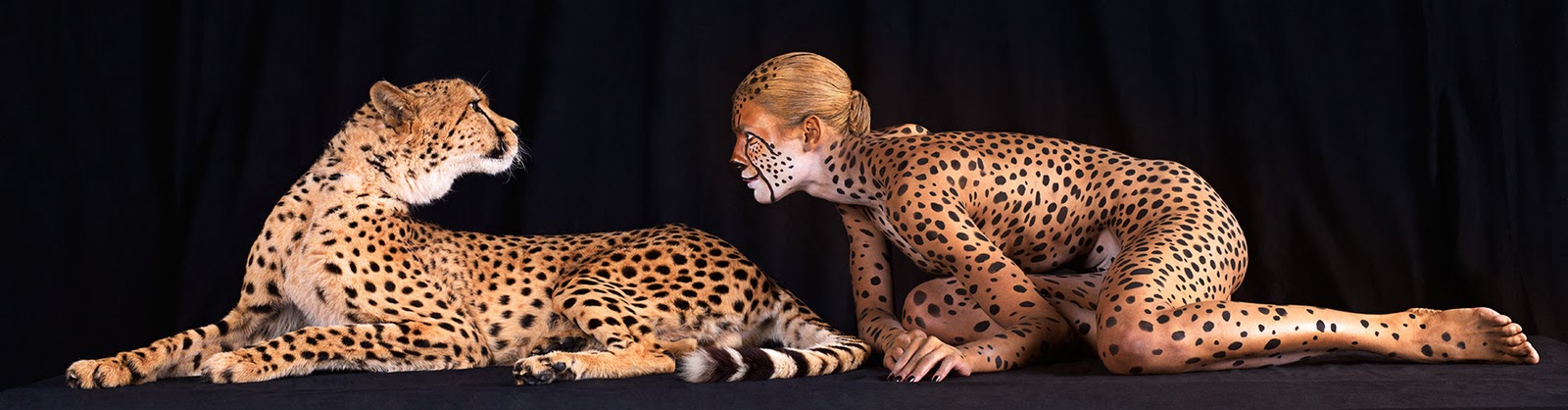
LENNETTE NEWEL


  LENNETTE NEWEL grew up in Nebraska, the daughter of a large-animal veterinarian and cattle rancher. By age six she was an accomplished horseback rider, competing in and winning pole and barrel racing competitions. Cattle, dogs, cats, peacocks and a pet skunk were an integral part of her daily experience. Her passion for animals and nature forged an interest in photography, which led to studies at Brooks Institute of Photography. Following the birth of her daughter Zoe, she was inspired to begin seriously photographing babies and children. 
Upon leaving the school she pursued a career in commercial photograhy, specializing in photographing children and animnals for advertising and corporate clients. Her work has garnered numerous prestigious awards, including Black&White Spider Awards. PDN Annual, American Photography 26, Graphics, Hasselblad Masters, International Photography Awards, Photography Masters Cup and PX3 Prix de la Photographie, Paris.
Actually, she lives in Northern California.

miércoles, 26 de febrero de 2014

ANNICK BOUVATTIER


Annick Bouvattier was born in Nevers in the mid sixties.
Her father, a paediatrician and art lover, passed on to her from her early childhood his passion for painting.
In 1982, after passing her school-leaving certificate with a science major, she broke away from the family tradition of studying medecine to enrol at the "Berçot - Marie Rucki" school of fashion where, for two years, she trained as a stylist. Her works were then presented in Paris and the Villa Médicis in Rome, and were praised by professionals and published in specialist magazines.
However, she was more attracted by stage fashion than haute-couture, and chose film and advertising. A stylist and costume-maker, she often works with Cinecitta in Rome. From her italian experience, she has retained the deep, warm and sensual colours - sun-filled ochres, velvety reds, intense blues and deep greens.
At the beginning of 1990, she decided to turn to painting exclusively.
After two years of self-training, she became in 1992 the pupil of Pierre Ramel, Mac Avoy's disciple and bursar who taught her the technique of using a knife to paint with oil, which she uses in smoothed out form to achieve an effect of transparency.
Annick Bouvattier painted women, often alone, in almost empty flats, but furnished mainly by shadows and light. Young, pretties, they live their femininity without false modesty, unconcerned by the looks of others.
Large canvases, close-up compositions, the works of Annick Bouvattier are spaces where the picturial rhymes with the emotional.